For UK local planning authorities
Planning applications that are valid first time
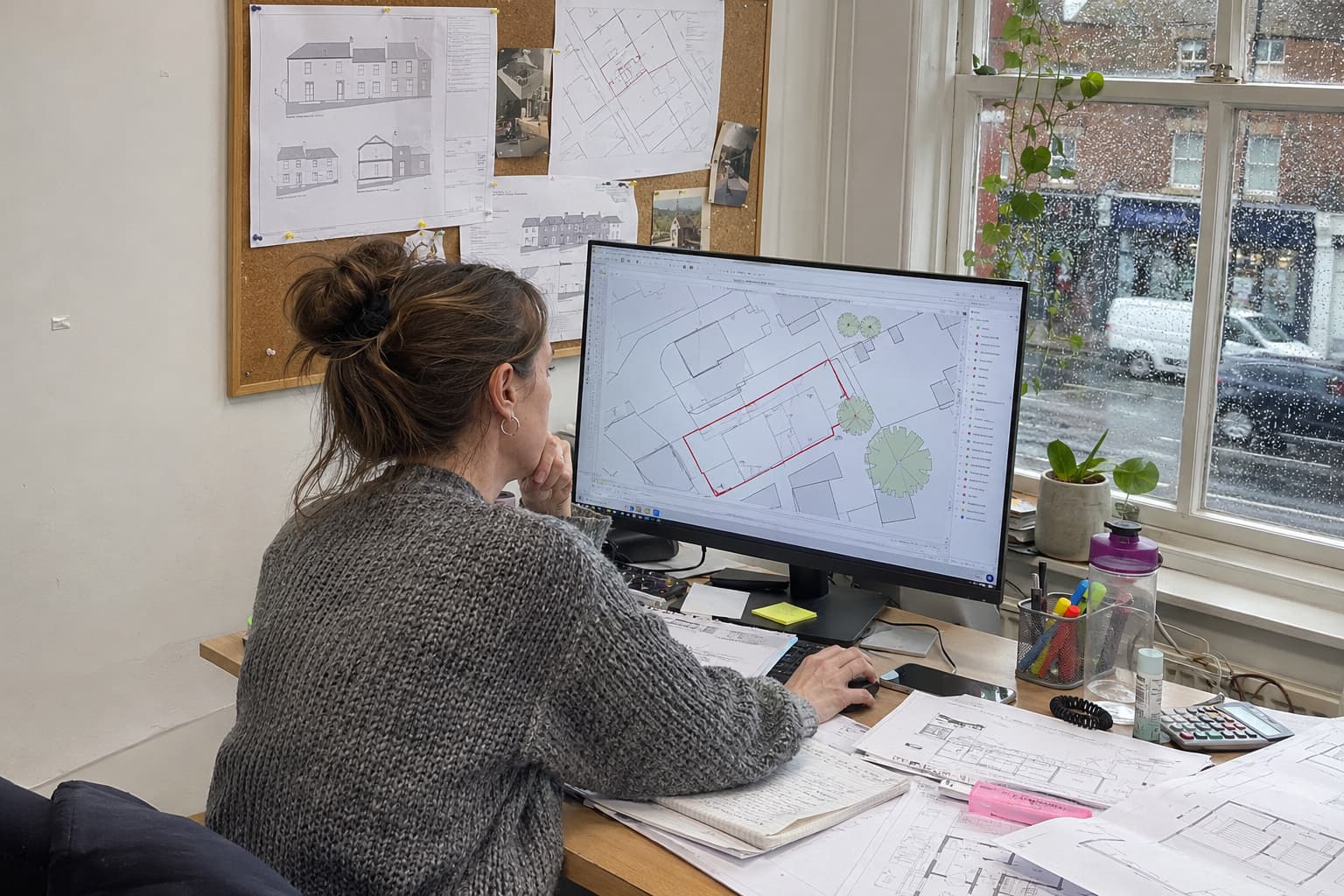
Householders and agents check their documents before they submit and see within a minute what a validation officer would ask for. Your validation team sees the same findings, each tied to the national or local requirement.
- Applicants attach the check report to their Planning Portal submission
- Every finding cites the national or local requirement
- Data and AI processing in Europe, under UK GDPR
- A planning officer always decides, never the AI
The problem
Invalid applications cost everyone weeks
An invalid application means a letter, a wait, a resubmission and an applicant who doesn’t know where they stand, while the statutory clock hasn’t started. Most of it is avoidable: a red line drawn short, a missing elevation, the wrong certificate.
~50%
of planning applications are invalid when first submitted; 22% of those because of the location plan
Planning Portal research, 2023
250,000
officer hours a year spent checking planning documents by hand
MHCLG, June 2026
41%
of decisions in April–June 2026 needed an extension of time or a performance agreement
MHCLG planning application statistics, England
Two sides
One check, for the applicant and for your validation team
For applicants and agents
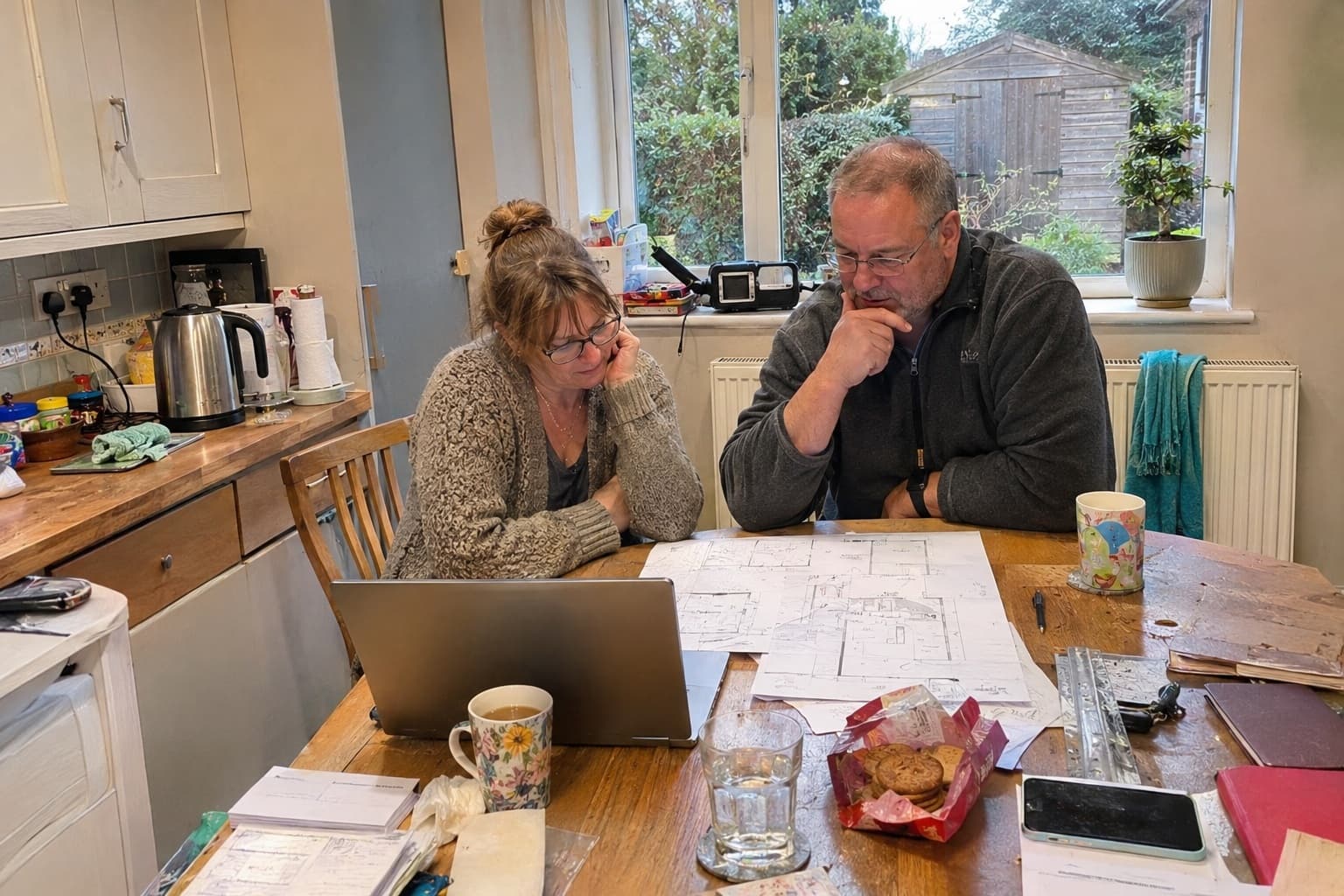
Householders, architects, planning agents and small developers
- Know beforehand which documents this council asks for, with examples of a good one
- Within a minute, per document, what is in order and what isn't, in plain English
- Site constraints and permitted-development signals before anything is drawn
- Invite your architect for just the drawings
- A check report with a code to attach to the Planning Portal submission

For your validation team
Validation officers, technical support and development management
- See straight away what is there and what is missing, document by document
- Site constraints from national planning data on the same screen
- A draft invalid-application letter citing each requirement, ready to send
- Approve, dismiss or correct every finding; every decision recorded
- Measure first-time valid rate, validation time and how often the check agreed with your officers
How it works
From postcode to a valid application, in five steps
01
Address first
The applicant types a postcode. ValidFirst finds the council and lists what national planning data says about the site: conservation area, listed building, Article 4 direction, protected trees, flood zone.
02
The right application
They describe the work in plain words (“single-storey rear extension”). ValidFirst suggests the application type, says when permitted development might apply, and shows the documents this council asks for, with examples.
03
Checked within a minute
Every upload is read against the national requirements and the council’s local list. A red line that misses the road, a missing existing elevation or the wrong ownership certificate shows up at once, with how to fix it.
04
Submit with a check code
The applicant submits through the Planning Portal as usual and attaches the check report. Its code links the submission to the check when it reaches the council.
05
Validation in minutes
Your validation officer sees each document’s findings, the site constraints and what is missing. If the application is invalid, a letter listing each missing item and the requirement behind it is ready to send.
Application types
Beyond householder applications
Householder
Householder planning permission
For extensions, loft conversions and dormers, porches, garden rooms and garages, and fences, walls or driveways at a house, when the works need planning permission. Not for flats, new homes or a change of use.
3 documents always needed · 101 checks
Full planning permission
Full planning permission (minor development)
For up to 9 new homes, conversions into flats, changes of use, works to flats and commercial buildings, and new shopfronts. Not for extensions to a house (use householder) or major development.
4 documents always needed · 114 checks
Trees
Works to protected trees
Consent to cut down or prune a tree with a Tree Preservation Order, or 6 weeks' notice for a tree in a conservation area. There's no fee.
2 documents always needed · 22 checks
Lawful development certificates
Lawful development certificate (proposed)
A legally binding confirmation from the council that something you plan to do, most often a permitted development extension, loft conversion or outbuilding, would be lawful without planning permission.
2 documents always needed · 65 checks
Listed buildings
Listed building consent
For works that affect the character of a listed building, inside or out: alterations, extensions and demolition. Often needed alongside planning permission.
7 documents always needed · 75 checks
Prior approval
Prior approval: larger single-storey rear extension
For a single-storey rear extension deeper than 3 m (4 m for a detached house) and up to 6 m (8 m detached), under permitted development. The council asks your neighbours and only looks at the effect on them.
2 documents always needed · 41 checks
Advertisements
Advertisement consent
Consent to display a sign or advert, such as an illuminated fascia, a projecting sign, a totem or a hoarding, when it doesn't have deemed consent.
4 documents always needed · 24 checks
Lawful development certificates
Lawful development certificate (existing)
A legally binding confirmation that an existing use, building work or breach of a condition is lawful, usually because it has gone on long enough that no enforcement action can be taken.
4 documents always needed · 34 checks
Permitted development
Reads the drawings, not just the form
Heights, depths and distances written on the elevations and plans are compared with the limits in the General Permitted Development Order, taking the site’s constraints into account. The result is a signal for the applicant and your officer, with the paragraph it comes from: never a decision. A lawful development certificate or your officer gives certainty.
- Class A extensions: depth, height, eaves within 2 m of a boundary, width of side extensions
- Class B roof additions: volume, principal elevation, Article 2(3) land
- Porches and outbuildings: area, height, distance to the boundary
Alongside PlanAssist
PlanAssist helps officers assess. ValidFirst makes sure what reaches them is valid.
| PlanAssist (published) | ValidFirst | |
|---|---|---|
| Who uses it | Planning officers, after an application is submitted | Applicants and agents before they submit, and validation officers when it arrives |
| Application types | Householder applications | 8 types: householder, full, lawful development certificates, prior approval, listed building consent, works to trees, advertisement consent |
| Where it runs | 15 councils in a 12-month beta; government intends to offer it to every council in England by the end of 2027 | A page for each of England's 308 planning authorities today; a council goes live in days |
| What it stops | Officer time spent assessing an application | Invalid applications reaching the council in the first place, and officer time spent validating |
| Evidence | Vendor figures: up to 58% less officer time on assessment; no published error rates | Accuracy measured per council: every AI finding against the officer's decision, shown to the council |
| Transparency | No ATRS record or DPIA found | Draft ATRS record, DPIA and data processing terms ready for your DPO |
PlanAssist facts from GOV.UK (30 October 2026) and Google DeepMind (31 October 2026). Sources and detail
Every council
Your council already has a page
All 308 local planning authorities in England, national park authorities and development corporations included. Each page runs on the national requirements and real site constraints, so you can try it with an address in your own area today. Your local list goes on top when you join.

Control
The decision stays with your council
A check, not a decision
The AI checks whether documents show what is asked. Your officer validates, asks for more or dismisses a finding. Validation stays a statutory decision of the council.
Every requirement with its source
Each finding names where it comes from: the DMPO 2015, the national information requirements, or the paragraph of your own local list. So every invalid-application letter can be explained and defended.
Ready for your DPO and security team
A draft DPIA, UK GDPR Article 28 terms, an Algorithmic Transparency Recording Standard record and a security statement mapped to the NCSC cloud principles, written to be checked.
Security, data and AIHow a council uses itPilot, procurement and price
Does this replace the Planning Portal or our back-office system?
How is it different from PlanAssist?
Who keeps our local validation list up to date?
Does the AI decide whether an application is valid?
Where is the data processed?
What if the check is wrong?
How do we start?
See it with a real application
Upload a location plan, an elevation or an ownership certificate in our example council and see what a validation officer would see.